
IADL: U.S. sanctions targeting International Criminal Court are an outrage against international justice See the statement on our...
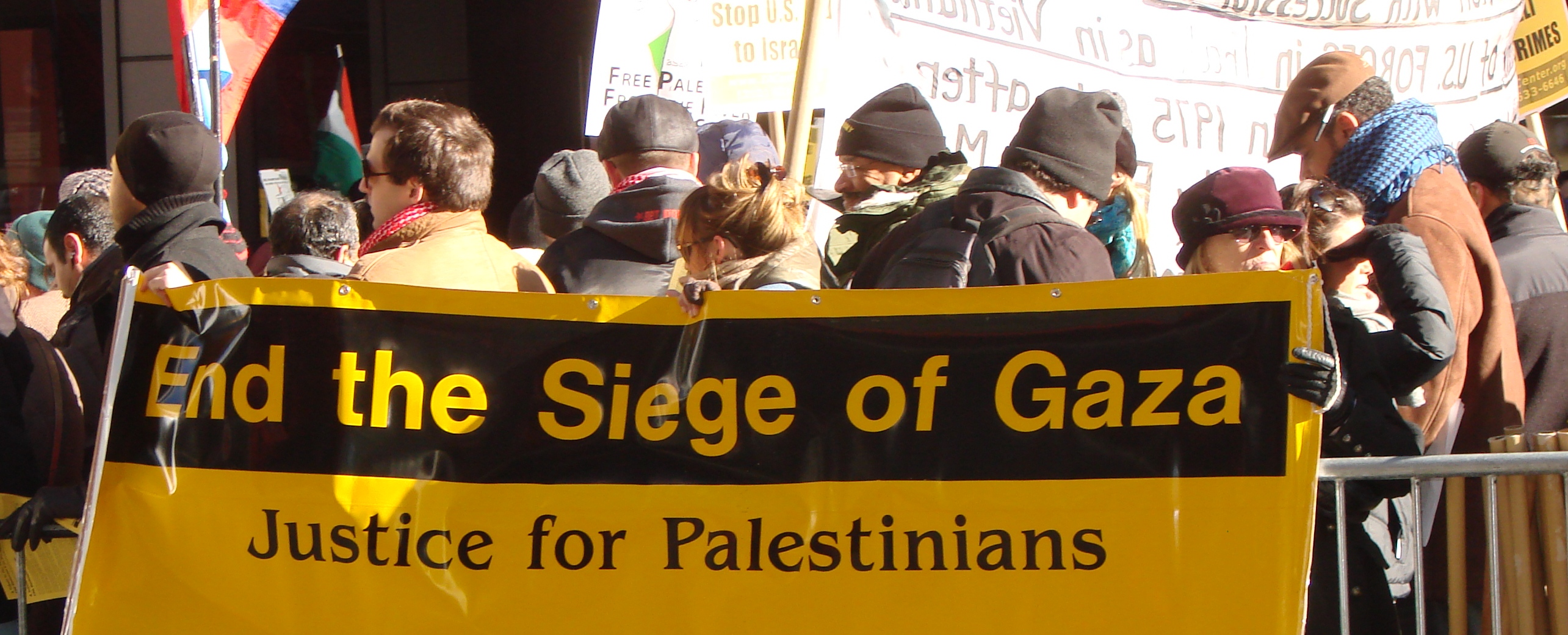
The WESPAC Committee for Justice & Peace in the Middle East is a group of concerned people from the Westchester County area formed to educate the general community, promote open discussion and dialogue and advocate for just solutions to the current destructive situations in the Middle East, particularly in Palestine/Israel. WESPAC supports the call by over 200 Palestinian civil society organizations for punitive measures including boycotts, divestment, and sanctions to be maintained until Israel meets its obligation to recognize the Palestinian People’s inalienable right to self-determination and fully complies with the precepts of international law. We call for an end to all occupations in the region. The committee meets regularly and invites participation from the public. Please contact the office at 914.449.6514 or email [email protected] for more information.
Beinart and the Palestinian Right of Return
Beinart: “Well I think ultimately the right of a refugee return, not just to the West Bank but also to Israel proper. Now, one of the ways Land for All thinks about that, is through a notion of those Palestinians refugees remaining, being citizens of a Palestinian...
WESPAC Awards Gathering 2020!
What a magnificent awards gathering the WESPAC Community had last night! Between the awardees and our keynote speaker, we were all transported to the realm of possibility and the world that we can make happen together! Take a listen:...
A Call to Police Leaders
The Antiracist Alliance, WCPR, the local chapter of NYCLU as well as WESPAC have worked together to put together this letter. We are asking for additional organizations, groups and congregations to please add your names if you support our list of specific reforms...
The UAE’s seedy influence operations are a footnote in the Mueller Report
Washington DC, April 23 — Last week, the redacted text of the Mueller Report dropped—into a Capitol Hill that will spend much of the rest of the present Congressional session dealing with its fallout.
Robert Mueller’s investigation was into allegations only of Russian interference in U.S. politics. But at one point his report highlights some highly questionable (Russia-related) contacts that people close to Trump’s transition team had with representatives of another government that has intervened massively in U.S. policymaking in recent years: the United Arab Emirates.
The UAE is a small but very wealthy federation of seven tiny emirates (princedoms) strung out along the coast of the Gulf. Through the wily hawkishness of its powerful Crown Prince, Mohammed bin Zayed (MBZ), the UAE has played a major role in prolonging the war in Yemen, fomenting and supporting the conflicts in Syria and Libya, overthrowing (in 2013) the elected government in Egypt—and in persuading Pres. Trump to walk out of the key de-escalation/denuclearization deal the United States concluded with Iran in 2015.
MBZ may have only the title of “crown prince”, but he has dominated the UAE’s policymaking for more than a dozen years now. And back in early 2015, when the ageing King Salman became king of neighboring Saudi Arabia, MBZ reportedly played a big role in boosting the elevation of one of Salman’s younger sons, Mohammad bin Salman (MBS), to the powerful role of crown prince… and we have seen some of the ruthlessness that MBS brought to that role.
Like MBS, MBZ doubtless views himself as a very “modern” crown prince. As part of that, his pursuit of his chosen, ultra-hawkish policies in the Middle East has been accompanied by massive lobbying efforts in Washington, designed to try to keep the world’s sole remaining (if somewhat fading) superpower on his side. So if the Justice Department and relevant congressional committees want to investigate interventions that foreign entities have been making in the US political process, then the role of the UAE government– as well as the Saudi and Israeli governments—should certainly also be examined.
Muzzling the discourse
“Interventions”, in this sense, should include not only direct lobbying for or against various policies but also the attempts these outside actors make to frame, skew, or on occasion outright muzzle the elite discourse in this country. These actors accomplish this in a number of ways, including by hiring PR firms and through the investments they make in various think-tanks… those specifically Washington institutions that generate and support “experts” whose analyses and views then—if the think-tank is successful—get widely quoted in the corporate media, thus becoming part of the country’s “conventional wisdom.”
Over the past decade, the UAE became a big player in the think-tank scene in Washington DC, which had previously been dominated, on matters Middle Eastern, by the large ranks of big, pro-Israeli American funders like Haim Saban—and to a lesser extent by the Saudis.
In the early 2000s Saban, an Israeli-American entertainment mogul (and close Clinton buddy), used his money to take over the previously professional Middle East studies department at the Brookings Institution, which renamed it the “Saban Center”. Saban was the guy who once told an audience in Israel that the “three ways to be influential in American politics,” were “make donations to political parties, establish think tanks, and control media outlets.” He has also repeatedly said, “I’m a one-issue guy and my issue is Israel.”
Not surprisingly, when MBZ wanted to “be influential in American politics”, he followed as much as he could of Saban’s playbook. Not being an American citizen meant that following some of Saban’s three paths to success was a little harder and more complex—but he had two trusty lieutenants to help him out.
George [not Ralph!] Nader
One was George Nader, a veteran Lebanese-American fixer who has worked for MBZ for many years and who is also a close associate of big GOP fundraiser– and Trump buddy– Elliot Broidy. Section IV (B) 2 of Volume 1 of the Mueller report described how, just a week before Trump’s inauguration, Nader and MBZ had set up a meeting in the Seychelles between Putin intimate Kirill Dmitriev and Blackwater founder Erik Prince, whom Nader thought was close to the Trump transition (and who anyway had a long history of working with MBZ in the UAE.) But Erik Prince apparently demurred from playing any immediate further role in establishing a secret Trump-Putin “back channel.”
Back in the 1980s, I knew Nader as an ambitious young man who cut quite a figure as the editor and publisher of a very glossy, Washington DC-based magazine called Middle East Insight. It carried intriguing interviews with a broad range of movers and shakers in Middle Eastern politics (and was suspected by many of us actual journalists in Washington of being a CIA front.) He and the magazine then dropped out of sight. Child pornography charges were reportedly involved. Years later, he resurfaced in the Czech Republic having been convicted there on several charges of child molestation… More recently, he resurfaced again as a key bagman for MBZ, including in relation to some non-trivial arms dealing.
Last year, after investigators on Mueller’s team subpoenaed the contents of Nader’s phone, he began to sing. (Scores of the footnotes to the relevant section of Mueller’s report are attributed to texts found on Nader’s phone.)
In April 2017, however, Nader was still busy doing his influence-peddling for MBZ. As the AP would later report, that was the month that Nader wired $2.5 million to Elliott Broidy through a company in Canada. The AP’s sources indicated that Nader sent the money to underwrite efforts to win US support for the campaign Saudi Arabia and the UAE were launching against Qatar. Those efforts included a Broidy-funded, anti-Qatar conference held by the ultra-right-wing think-tank, the Foundation for the Defense of Democracies, and campaign donations of nearly $600,000 that Broidy made to anti-Qatar political bodies and campaigns.
Yousef al-Otaiba
Another, even higher-level US bagman for MBZ has long been the UAE ambassador in Washington, Yousef al-Otaiba. He has also worked diligently to follow the Haim Saban playbook for how to win friends and influence policy in Washington—including the campaigns to control think-tanks.
Otaiba was named ambassador in March 2008. Just one month later an associate of Amb. (retd.) Wendy Chamberlain, the head of Washington’s venerable Middle East Institute think-tank, reportedly reached out to ask Otaiba to support a major MEI capital campaign. Eight years later, Ms. Chamberlain finally got her reply: a $20 million donation from the UAE, which has now nearly finished completion of a large-scale refurbishment of its headquarters.
The past twelve years have seen numerous examples of such think-tank investments being made by rich Arab states—especially by Saudi Arabia, the UAE, and Qatar. Sometimes, these states followed the path of “capturing”—or, heavily investing in—existing think-tanks, as Saban had at Brookings and Otaiba did with MEI. Or sometimes, they followed the path pioneered in the 1980s by the big, pro-Israeli donor Barbi Weinberg, who worked with former AIPAC staffer Martin Indyk to create her own, wholly new think-tank: the Washington Institute for Near East Policy.
The Center for Responsive Politics reports that the FARA-reported influence operations of these three Arab states in 2017-2018 totaled $90.3 million, compared with $63.5 million reported by Israel. Influence operations funded by Israel are of course generously supplemented by those funded by US individuals and entities deeply supportive of Israel, like AIPAC. On many issues, including Iran, the campaigns of Saudi Arabia and the UAE push in the same direction as those of Israel.
In the case of the big Gulf-Arab donors, their battle for influence heated up considerably in mid-2017, after MBZ and MBS decided to try to knock the Emir of Qatar off his throne and divvy up the $320 billion-worth of assets of Qatar’s sovereign wealth fund that he controlled. By then, Qatar’s own pet DC think tank, the Arab Center of Washington, was already well established. But Saudi Arabia (which had also invested in MEI, and which also owned and controlled a couple of smaller think-tanks in town) and the UAE then created two entirely new think-tanks to combat Qatar: the Arabia Foundation, and the Arab Gulf States Institute in Washington. The battle of narratives was royally joined!
(MBZ and MBS overlooked the fact that the largest number of US troops anywhere in the region are deployed in two massive bases in Qatar, and the Pentagon definitely doesn’t want to remove them. So though Pres. Trump expressed some initial support for the Saudi/Emirati plan to unseat Qatar’s Emir, the US government as a whole never followed through.)
Controlling the narrative on Yemen
All these shenanigans on the behalf of the Gulf-Arab super-rich are important– for a number of compelling reasons. First, the investments that all of them have made, over the past several years, have had a strong effect on public understanding of key issues in the Middle East, and on policy. As noted earlier, these issues include Yemen, Syria, Libya, and Iran.
Of these issues, Yemen is the one regarding which these Gulf Arabs have—recently—been least successful in controlling the narrative. Their argument that the Houthi alliance that has controlled the capital, Sanaa, and considerable surrounding areas for many years is illegitimate, is totally controlled by Iran, and is solely responsible for the country’s suffering—and that therefore Americans and everyone else should support the Saudi/UAE alliance that has been battling the Houthis, has finally been exposed on every count. Just last week, finally, the US Senate supported a resolution to end the support the US military has been giving to the Saudi war effort in Yemen. That was a real victory for the antiwar forces. Trump vetoed the resolution, but Sen. Sanders is hoping to win enough support to over-ride the veto. Stay tuned…
But MBS (help from MBZ and the Pentagon, under Obama) launched Saudi Arabia’s large-scale military push into Yemen back in March 2015. It has taken four years for the US Senate to get to where it is on the Yemen issue, which is a shockingly long time. In the meantime, more than 70,000 Yemeni civilians have been killed, and millions more face imminent threats of cholera and starvation.
Secondly, the capture by these ruthlessly ideological forces of so many of the Washington think-tanks that previously had long reputations for fair-minded, objective research means it is almost impossible these days for anyone reading their output—whether directly, or indirectly, through the way they get quoted in the media—to get anything like an accurate picture of the situation in the countries being described.
This applies particularly to Syria, where since 2011 the bought-and-paid-for think-tanks have rigidly suppressed any viewpoints that challenge the view that Pres. Bashar al-Asad is uniquely evil and has to be overthrown. As someone who has worked on Syria-related issues since the 1970s, I have seen this happen at first hand. In my last appearance at an MEI event on Syria, in summer 2011, I pointed out that Pres. Asad still retained considerably more support from Syria’s citizens than the “regime change” crowd claimed, and that the “opposition” was splintered and in disarray. I was right. But MEI notably never invited me back and even refused to host other experts on Syria whom I had suggested for their programing.
Bottom line: If you read something from someone billed as a “think-tank expert” look carefully at their institution’s funding before you judge the value of their work.
And a final takeaway from the whole sorry saga of these Gulf states’ ridiculously large investments in think tanks? Consider the opportunity costs involved. Imagine if these states had spent this amount of money funding some of the sorely-needed debates, studies, or other interventions on the Palestine Question! (Imagine what Mondoweiss, or Just World Educational, or Palestine Legal could do with $20 million…) But no. The institutions that have received hefty Gulf-Arab funding have done pitifully little programing on Palestine, leaving that “field of discourse” open for the Zionists’ continued domination.
So George Nader may have been just a minor bit-player in the Mueller investigation’s saga. But the phenomenon of Gulf-Arab intervention in US politics and discourse that he represented was a much more serious matter.
Helena Cobban is the President of Just World Educational (JWE), a non-profit organization, and the CEO of Just World Books. She has had a lengthy career as a journalist, writer, and researcher on international affairs, including 17 years as a columnist on global issues for The Christian Science Monitor. Of the seven books she’s published on international affairs, four have been on Middle Eastern topics. This new series of commentaries she’s writing, “Story/Backstory”, will have an expanded audio component published in JWE’s podcast series. They represent her own opinion and judgments, not those of any organization.
Article link:
https://mondoweiss.net/2019/04/influence-operations-footnote/
How Israel is working to remove Palestinians from Jerusalem
https://www.jonathan-cook.net/2019-03-31/israel-remove- palestinians-jerusalem/ How Israel is working to remove Palestinians from Jerusalem
By Jonathan CookMiddle East Eye – 31 March 2019
The 350,000 Palestinian inhabitants of occupied East Jerusalem are caught between a rock and hard place, as Israel works ever harder to remove them from the holy city in which they were born, analysts and residents warn.
That process, they say, has only accelerated in the wake of US President Donald Trump’s decision a year ago to relocate the American embassy to Jerusalem, effectively endorsing the city as Israel’s exclusive capital.
“Israel wants Palestinians in Jerusalem to understand that they are trapped, that they are being strangled, in the hope they will conclude that life is better outside the city,” said Amneh Badran, a politics professor at Jerusalem’s Al Quds university.
Since Israel seized the eastern part of Jerusalem in 1967 and then illegally annexed it in 1981, it has intentionally left the status of its Palestinian population unresolved.
Israeli officials have made Palestinians there “permanent residents,” though, in practice, their residency is easily revoked. According to Israel’s own figures, more than 14,500 Palestinians have been expelled from the city of their birth since 1967, often compelling their families to join them in exile.
Further, Israel finished its concrete wall slicing through East Jerusalem three years ago, cutting some 140,000 Palestinian residents off from the rest of the city.
A raft of well-documented policies – including house demolitions, a chronic shortage of classrooms, lack of public services, municipal underfunding, land seizures, home evictions by Jewish settlers, denial of family unification, and police and settler violence – have intensified over the years.
At the same time, Israel has denied the Palestinian Authority, a supposed government-in-waiting in the West Bank, any role in East Jerusalem, leaving the city’s Palestinians even more isolated and weak.
All of these factors are designed to pressure Palestinians to leave, usually to areas outside the wall or to nearby West Bank cities like Ramallah or Bethlehem.
“In Jerusalem, Israel’s overriding aim is at its most transparent: to take control of the land but without its Palestinian inhabitants,” said Daoud Alg’ol, a researcher on Jerusalem.
Like others, Mr Alg’ol noted that Israel had stepped up its ‘Judaisation’ policies in Jerusalem since the US relocated its embassy. “Israel is working more quickly, more confidently and more intensively because it believes Trump has given his blessing,” he said.
Demographic concerns dominated Israel’s thinking from the moment it occupied East Jerusalem in 1967, and subordinated it to the control of Jewish officials in West Jerusalem – in what Israel termed its newly “united capital”.
City boundaries were expanded eastwards to attach additional Palestinian lands to Jerusalem and then fill in the empty spaces with a ring of large Jewish settlements, said Aviv Tartasky, a researcher with Ir Amim, an organisation that campaigns for equal rights in Jerusalem.
The goal, he added, was to shore up a permanent three-quarters Jewish majority – to ensure Palestinians could not stake a claim to the city and to allay Israeli fears that one day the Palestinians might gain control of the municipality through elections.
Israel has nonetheless faced a shrinking Jewish majority because of higher Palestinian birth rates. Today, Palestinians comprise about 40 per cent of the total population of this artificially enlarged Jerusalem.
Israel has therefore been aggressively pursuing a twin-pronged approach, according to analysts.
On one side, wide-ranging discriminatory policies – that harm Palestinians and favour Jewish settlers – have been designed to erode Palestinians’ connection to Jerusalem, encouraging them to leave. And, on the other, revocation of residency rights and the gradual redrawing of municipal boundaries have forcibly placed Palestinians outside the city – in what some experts term a “silent transfer” or administrative ethnic cleansing.
Israel’s efforts to disconnect Palestinians from Jerusalem are most visibly expressed in the change of Arabic script on road signs. The city’s Arabic name, Al Quds (the Holy), has been gradually replaced by the Israeli name, Urshalim, transliterated into Arabic.
The lack of services and municipal funding and high unemployment mean that three-quarters of Palestinians in East Jerusalem live below the poverty line. That compares to only 15 per cent for Israeli Jews nationally.
Despite these abysmal figures, the municipality has provided four social services offices in the city for Palestinians, compared to 19 for Israeli Jews.
Only half of Palestinian residents are provided with access to the water grid. There are similar deficiencies in postal services, road infrastructure, pavements and cultural centres.
Meanwhile, human rights groups have noted that East Jerusalem lacks at least 2,000 classrooms for Palestinian children, and that the condition of 43 per cent of existing rooms is inadequate. A third of pupils fail to complete basic schooling.
But the biggest pressure on Palestinian residents has been inflicted through grossly discriminatory planning rules, said Mr Tartasky.
In the areas outside the wall, Palestinians have been abandoned by the municipality – and receive no services or policing at all.
Israel’s long-term aim, said Mr Tartasky, had been exposed in a leak of private comments made by Israeli Prime Minister Benjamin Netanyahu in 2015. He had proposed revoking the residency of the 140,000 Palestinians outside the wall.
“At the moment, the government is discussing putting these residents under the responsibility of the army,” Mr Tartasky said.
That would make them equivalent to Palestinians living in Israeli-controlled areas of the West Bank and sever their last connections to Jerusalem.
Meanwhile, on the inner side of the wall, Palestinian neighbourhoods have been tightly constrained, with much of the land declared either “scenic areas” or national parks, in which construction is illegal, or reserved for Jewish settlements. The inevitable result has been extreme overcrowding.
In addition, Israel has denied most Palestinian neighbourhoods’ masterplans, making it all but impossible to get building permits.
“The advantage for Israel is that planning regulations don’t look brutal – in fact, they can be presented as simple law enforcement,” said Mr Tartasky. “But if you have no place to live in Jerusalem, in the end you’ll have to move out of the city.”
An estimated 20,000 houses – about 40 per cent of the city’s Palestinian housing stock – are illegal and under threat of demolition. More than 800 homes, some housing several families, have been razed since 2004.
As well as the large purpose-built Jewish settlements located on Palestinian land in East Jerusalem, several thousand extremist settlers have taken over properties inside Palestinian neighbourhoods, often with the backing of the Israeli courts.
Mr Tartasky noted that Israel has been accelerating legal efforts to evict Palestinians from their homes over the past year, with close to 200 families in and around the Old City currently facing court battles.
When settlers move in following such evictions, Ms Badran said, the character of the Palestinian neighbourhoods rapidly changes.
“The settlers arrive, and then so do the police, the army, private security guards and municipal inspectors. The settlers have a machine behind them whose role is to make life as uncomfortable as possible for Palestinians. The message is: ‘You either accept your subjugation or leave’.”
In Silwan, where settler groups have established a touristic archaeological park in the midst of a densely populated Palestinian community just outside the Old City walls, life has been especially tough.
Mr Alg’ol, who lives in Silwan, noted that fortified settler compounds had been established throughout the area, many dozens more Palestinian families were facing evictions, excavations were taking place under Palestinian homes, closed-circuit TV watched residents 24 hours a day, and the security services were a constant presence. Many hundreds of children had been arrested in recent years, usually accused of stone throwing.
Israel’s newest move is the announcement of a cable car to bring tourists from West Jerusalem through Palestinian neighbourhoods like Silwan to the holy sites of the Old City.
Mr Tartasky said touristic initiatives had become another planning weapon against Palestinians. “These projects, from the cable car to a series of promenades, are ways to connect one settlement to the next, bisecting Palestinian space. They strengthen the settlements and break apart Palestinian neighbourhoods.”
Mr Alg’ol’s family was one of many in Silwan that had been told their lands were being confiscated for the cable car and a new police station.
“They want to turn our community into an archaeological Disneyland,” he said. “And we are in the way. They plan to keep going until we are all removed.”
Statement of Solidarity on the Anniversary of Kristallnacht
Statement of Solidarity on the Anniversary of Kristallnacht by Howard Horowitz, member of the WESPAC Foundation Board Tonight, we will commemorate the 80th anniversary of the Great Pogrom, which the Nazis euphemistically dubbed ‘the Night of Crystal’ – Kristallnacht. ...
The U.S. Govt was responsible for Sabra and Shatila Massacres
https://www.thenation.com/article/the-united-states-was-responsible-for-the-1982-massacre-of-palestinians-in-beirut/
A ‘gentleman’s agreement’: How Oslo worked out as planned for Israel
13 September 2018 Twenty-five years on, analysts say Oslo didn’t fail: it offered Israel a formula to block the emergence of a Palestinian state Jonathan Cook, Middle East Eye – 13 September 2018 There will be no anniversary celebrations this week to mark the signing...
There is a life behind every statistic
‘There is a life behind every statistic’ The real threat to Israel lies not in acts of Palestinian violence, but in understanding that those acts are a response to occupation and oppression, to injustice and dehumanisation. Sara Roy LRB Blog June 4, 2018 ...
WESPAC on Facebook

Celebrating Community, Art, Music & Our Shared Commitment to JusticeThursday, November 12, 2026 at 6:00 PMWESPAC Foundation77 Tarrytown Road, Suite 2WWhite Plains, NY 10607Dear WESPAC Friends, Members, and Community Partners,We warmly invite you to join us for WESPAC’s Annual Meeting of Members, an evening of community, reflection, inspiring art, live music, and renewed commitment to building a more just, peaceful, and compassionate world.At a time when our collective voices, creativity, and solidarity matter so deeply, we look forward to gathering with old friends and new, sharing a meal, reflecting on the challenges and opportunities before us, and celebrating the extraordinary power of ordinary people to shape history. Full details at www.wespac.org
Join us online October 12, at 8:00 PM for a teach-in on the Beacon Pipeline and to learn what we can do to stop it coming to Westchester. Register for the meeting link: bit.ly/4ddjc9
Dear Friends and Members of WESPAC,If concrete steps toward a peace deal aren’t taken before the midterm election, we risk the war against Iran spiraling into a permanent, multi-trillion-dollar quagmire.The administration has burned an estimated $2 billion a week on this conflict. These are funds that could build 4,000 new homes every single week or fix our failing roads and hospitals. Instead, our taxpayer dollars are being wasted on a war that a growing number of Americans do not want.We need decisive congressional action before the election.On Tuesday, October 20th, two weeks before the election, join a nationwide coalition to gather at U.S. House and Senate district offices, arriving 30 minutes before doors open to speak directly with lawmakers and their staff as they arrive for the day.Will you join our nationwide call to Congress outside your lawmaker’s office on October 20th to end the war against Iran?WESPAC will be outside of Congressmember George Latimer’s office located at 222 Mamaroneck Avenue in downtown White Plains.👉 RSVP and let us know if you’ll be outside your local congressional office.Check out the Action Kit with resources including social media posts, a customizable flyer, and a rally check list to make it easier to organize a rally! Comment endMore information about the nationwide Day of Action can be found here, including a growing list of rallies that are being planned around the country.In solidarity,Nada